Vehicle Wrap vs. Paint: Understanding the Core Differences
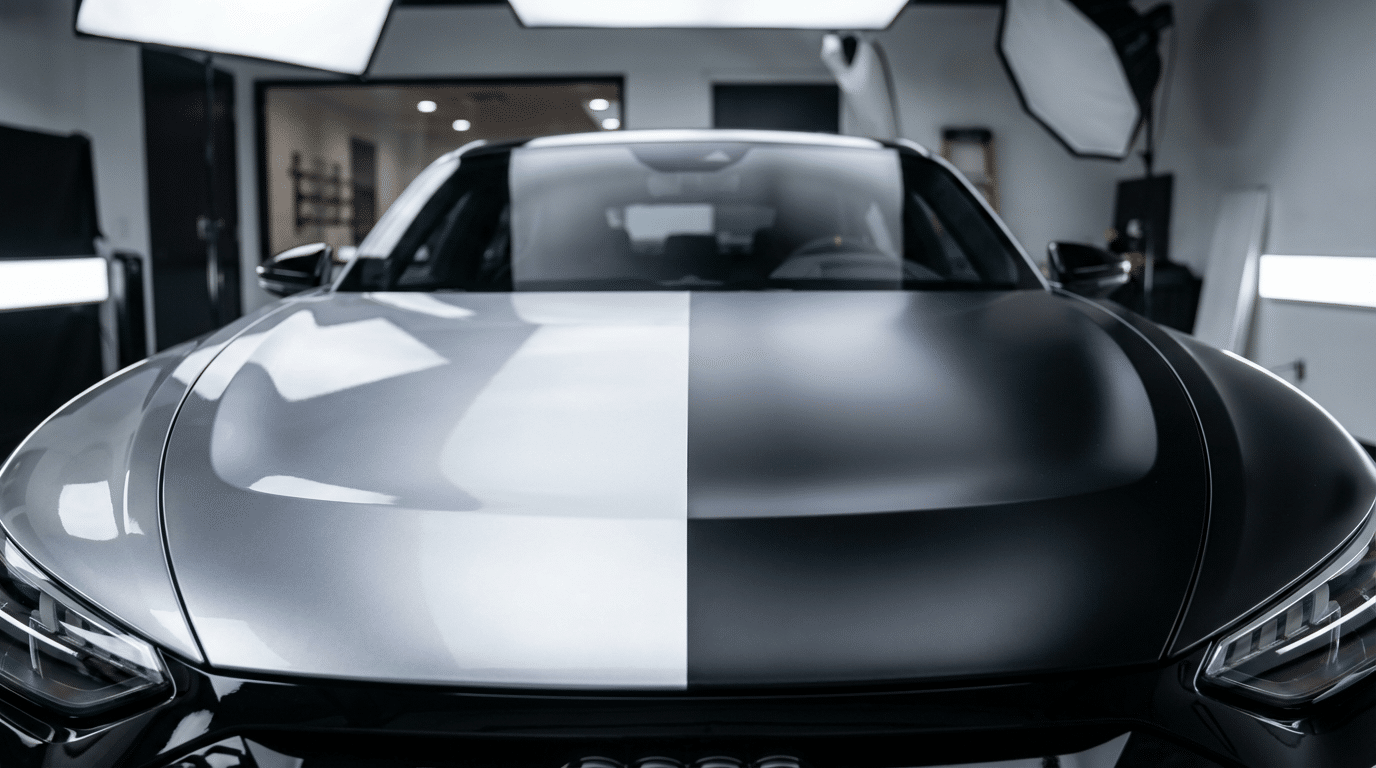
Choosing how to finish your vehicle's exterior comes down to two primary options: a vinyl wrap or a traditional paint job. A vehicle wrap is a large sheet of premium vinyl film applied directly over your vehicle's original paint, acting as a protective and transformative second skin. A paint job involves sanding down the original surface and applying multiple layers of liquid paint and clear coat, a permanent and irreversible chemical process.
While both change your car's look, their methods, benefits, and long-term implications are worlds apart. A wrap offers reversibility, paint protection, and vast design freedom. Paint offers a classic, permanent finish but comes with greater commitment and vulnerability to environmental damage. Understanding this fundamental difference is the first step in making the right choice for your vehicle and your goals.
What is a Vehicle Wrap?
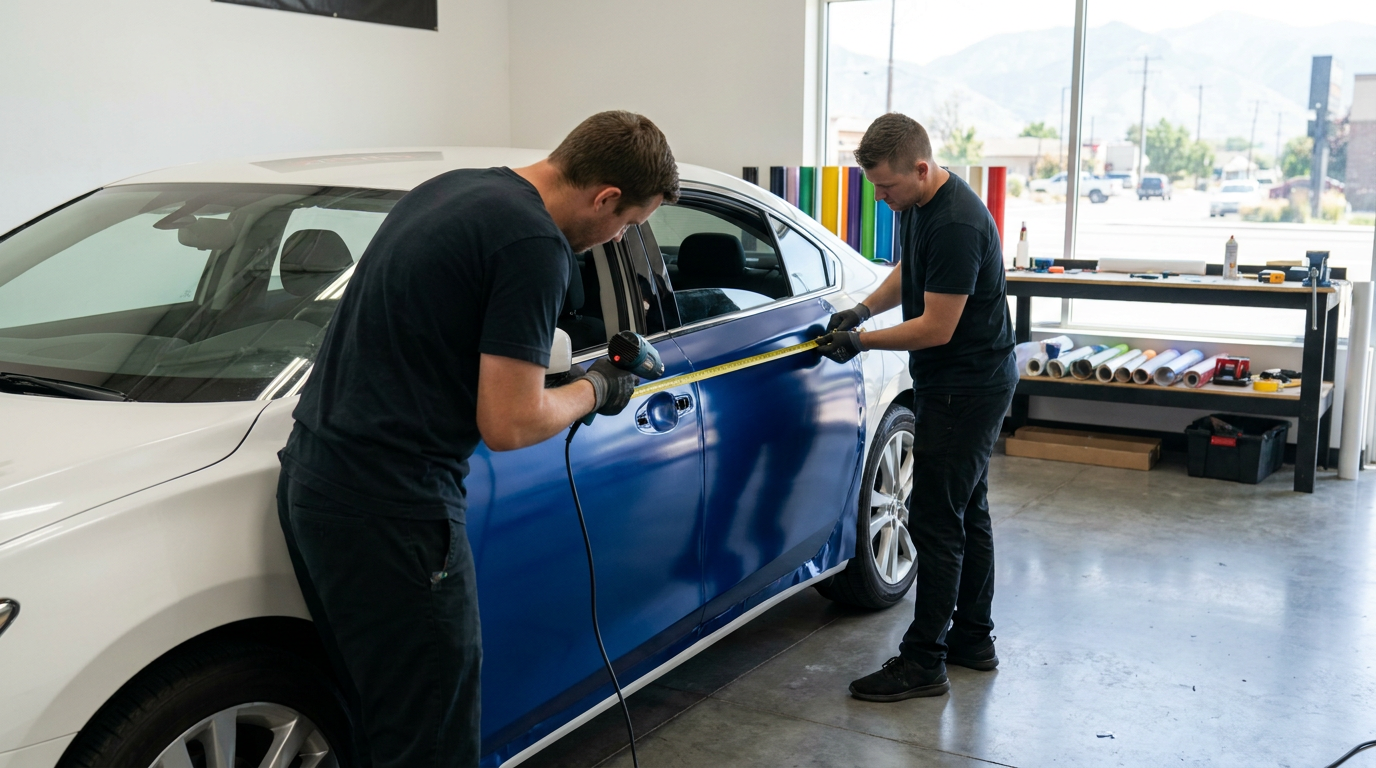
A vehicle wrap is a high-performance vinyl film manufactured by industry leaders like 3M and Avery Dennison. Our Certified Installers meticulously apply this vinyl to every curve and contour of your vehicle, creating a seamless, paint-like finish. The process is entirely non-destructive; the wrap adheres to your car’s factory paint but can be professionally removed years later without causing damage, revealing the perfectly preserved paint underneath.
Think of it as a custom-tailored suit for your car. It can be a solid color, a unique texture like matte or carbon fiber, or a fully printed design that turns your vehicle into a mobile billboard. This versatility makes wraps ideal for both personal customization and commercial fleet graphics and branding, offering a solution that is both visually stunning and strategically smart.
What We’ll Cover:
- Cost Comparison: Is Vehicle Wrapping Cheaper Than Painting?
- Durability and Longevity: How Long Do Wraps and Paint Last?
- Aesthetics and Customization: Unlocking Unique Looks
- Maintenance and Care: Keeping Your Car Looking Its Best
- Impact on Resale Value: Wrapped Cars vs. Painted Cars
- Potential Downsides: What to Consider Before Wrapping Your Car
- Is a Vehicle Wrap or Paint Right for Your Investment?
What is a Traditional Car Paint Job?
A traditional paint job is a multi-stage process that permanently alters your vehicle's surface. It begins with extensive prep work, including sanding the existing paint to create a smooth, adhesive-ready surface. From there, a painter applies several coats: primer, multiple layers of colored base coat, and finally, a protective clear coat. Each layer must be cured, often in a specialized paint booth, to achieve a durable, glossy finish.
The quality of a paint job can vary dramatically depending on the painter's skill and the quality of the materials used. A high-end, show-quality paint job can look incredible, but it's a permanent commitment. Once painted, the original factory finish is gone forever, a factor that can significantly impact the vehicle's future resale value and limit your options for future style changes.
Cost Comparison: Is Vehicle Wrapping Cheaper Than Painting?
A high-quality vehicle wrap is almost always more cost-effective than a comparably high-quality paint job. While the price of a cheap, low-quality paint job might seem competitive, it often leads to premature peeling, fading, and a lower-quality finish that devalues your car. When comparing professional-grade services, a wrap delivers superior value, customization, and protection for your investment.
Initial Investment: Wrap vs. Paint Price Ranges
The initial cost of a professional vehicle wrap typically ranges from $2,500 to $6,000, depending on the vehicle size and the complexity of the film. A specialty finish like chrome or a fully custom-printed design will be on the higher end. In contrast, a reputable, high-quality paint job starts at around $5,000 and can easily exceed $10,000, or even $20,000, for show-quality work with unique colors.
Furthermore, we include professional graphic design with every vehicle wrap at no extra cost. For a business, this can save you thousands in design fees. For an individual, it means our expert team helps you visualize and perfect your dream look before we even touch your vehicle. This bundled value is something most paint shops simply cannot offer, making the cost of a car wrap color change a much more predictable and comprehensive investment.
Long-Term Costs: Maintenance and Repair of Wraps and Paint
Vinyl wraps are significantly easier and cheaper to repair than paint. If a section of your wrap gets scratched or damaged, we can simply remove and replace that specific panel. The color and finish will be a perfect match, and the repair is often completed in just a few hours. This keeps your vehicle on the road, a critical factor for commercial fleets where downtime equals lost revenue.
Repairing painted surfaces is a far more involved and expensive process. A deep scratch requires sanding, priming, and blending the new paint into the surrounding area, a skill that is difficult to master. Color-matching aged paint can be a major challenge, often resulting in a noticeable patch. This process is not only costly but can keep your vehicle in the shop for days.
Durability and Longevity: How Long Do Wraps and Paint Last?
A professionally installed premium vinyl wrap is engineered for exceptional durability, designed to last 5 to 7 years or even longer with proper care. These films are specifically made to withstand UV exposure, road salt, and minor abrasions. As a 3M Preferred Graphics Provider, we use materials that represent the pinnacle of vinyl technology, ensuring a finish that is as resilient as it is beautiful.
While a high-quality paint job can last for the life of the vehicle, it is far more susceptible to damage from its first day on the road. Paint chips from rocks, light scratches from car washes, and fading from Utah's intense sun are constant threats. A wrap, on the other hand, acts as a sacrificial layer, absorbing this damage to keep your original paint immaculate.
Protecting Your Original Paint: The Wrap Advantage
The single greatest advantage of a vehicle wrap is its ability to protect the factory paint underneath. The vinyl film serves as a durable barrier against rock chips, minor scratches, insect acids, bird droppings, and harmful UV rays that cause paint to fade and oxidize. It essentially cryogenically freezes your OEM paint in its current condition.
When you decide to sell the vehicle or simply want a new look, our technicians can professionally remove the wrap. The original paint will be revealed in the same condition it was in on the day the wrap was applied. This preservation of the factory finish is a massive factor in maintaining—and often increasing—your vehicle's resale value.
Wear and Tear: Resistance to Chips, Scratches, and Fading
Premium vinyl films are remarkably resilient. The material has a self-healing property for very light scratches; a little heat from a heat gun or the sun can make them disappear. While a sharp rock can still damage a wrap, it is far less likely to happen than a paint chip, as the vinyl flexes and absorbs the impact. The same can't be said for a rigid layer of paint and clear coat.
This durability is one reason premium 3M wrap films are worth the investment. They are engineered with advanced UV inhibitors and a protective overlaminate that prevents fading and discoloration. Your custom color or printed graphic will remain vibrant and true for years, even under constant exposure to the elements.
Aesthetics and Customization: Unlocking Unique Looks
Vehicle wraps offer a universe of aesthetic possibilities that traditional paint can't match. You can choose from hundreds of colors and finishes that are either impossible or astronomically expensive to achieve with paint. From stealthy matte black and satin finishes to eye-catching color-shifting chromes and textured carbon fiber, a wrap allows you to completely redefine your vehicle's personality.
For businesses, this extends to full-scale mobile advertising. Our free graphic design services allow you to transform your company van, truck, or even a fleet of tankers into a stunning mobile billboard. With photorealistic printing, there is no limit to the imagery, logos, and messaging you can apply, creating brand recognition every mile you drive.
Color, Finish, and Design Options for Vehicle Wraps
The creative freedom offered by wraps is unparalleled. Beyond a simple color change, you have access to a vast catalog of unique styles.
- Finishes: Choose from gloss, satin, matte, chrome, brushed metal, and carbon fiber textures.
- Colors: Access hundreds of off-the-shelf colors, including dynamic color-shifting films that change appearance depending on the light and viewing angle.
- Custom Graphics: Print any high-resolution image, pattern, or design imaginable. This is the foundation of turning a vehicle into a powerful marketing tool.
This flexibility allows you to make a statement that is truly your own. Whether you're a car enthusiast looking for a one-of-a-kind look or a business wanting to turn heads, the options are virtually limitless.
Limitations of Traditional Automotive Paint
While paint can produce a beautiful finish, it is inherently limited. Achieving a true matte or satin finish with paint is notoriously difficult and requires a specialist painter, significantly driving up the cost. These finishes are also extremely hard to maintain and nearly impossible to repair without re-painting the entire panel or car.
Complex graphics or multi-colored designs require extensive masking, layering, and airbrushing—a time-consuming and costly process reserved for high-end custom show cars. A vehicle wrap delivers a more precise, consistent result at a fraction of the cost and time. The permanent nature of paint also means you are locked into your decision, removing any potential for future changes or updates without another expensive paint job.
Maintenance and Care: Keeping Your Car Looking Its Best
Maintaining a wrapped vehicle is surprisingly simple and requires no special chemicals or expensive detailing products. The key is regular cleaning to prevent dirt and contaminants from building up. Following a few basic guidelines will keep your wrap looking pristine for its entire lifespan and ensure it continues to protect the paint underneath.
In contrast, painted surfaces require more delicate care. They need regular waxing to protect the clear coat from UV damage and can be easily swirled or scratched by automated car washes. A wrap simplifies your maintenance routine while providing superior protection.
Washing and Detailing a Wrapped Vehicle
The best way to wash a wrapped vehicle is by hand, using a gentle automotive soap and a soft microfiber mitt. This prevents any risk of high-pressure jets or harsh bristles damaging the vinyl. For tough spots like insect residue or tar, use a 50/50 mix of isopropyl alcohol and water.
Can a wrapped car go through a car wash? We recommend hand washing for the best results. However, if you must use an automated wash, choose a touchless system only. Avoid car washes that use abrasive brushes, as they can scratch the film and cause edges to lift over time. Never use wax on a matte or textured wrap, as it will create a blotchy, uneven shine.
Caring for a Painted Car Surface
Maintaining a perfect paint job requires diligence. To prevent fading and oxidation, the surface should be waxed every few months. Scratches and swirls, often caused by improper washing techniques or automated car washes, require professional paint correction and polishing to remove.
Bird droppings and bug splatter are particularly corrosive to paint and must be removed immediately to prevent the acid from etching into the clear coat. This constant vigilance and specialized care add to the long-term cost and effort of owning a painted vehicle compared to a wrapped one.
Impact on Resale Value: Wrapped Cars vs. Painted Cars
A vehicle wrap is one of the smartest decisions you can make to protect your car's resale value. By preserving the original factory paint in pristine condition, a wrap ensures that your vehicle remains as valuable as possible. When it's time to sell, removing the wrap reveals a flawless finish that is highly attractive to potential buyers.
Conversely, a custom paint job, especially in a non-factory color, can significantly decrease a car's resale value. Many buyers prefer the original OEM finish and may be hesitant to purchase a vehicle that has been permanently altered. A wrap gives you the freedom to customize without the financial risk.
Preserving OEM Paint with a Wrap
The value of a vehicle is heavily tied to its condition, and the paint is one of the first things a prospective buyer inspects. A car with chipped, scratched, or faded paint will immediately command a lower price. A wrap acts as a shield, preserving that factory finish against the wear and tear of daily driving.
This is especially critical for new or high-value vehicles, including unique models like the Tesla Cybertruck, where protecting the stainless-steel body is a top priority for owners. As Utah's most trusted experts with over 20 years of experience, we've helped countless owners protect their investment, ensuring they get top dollar when it's time to sell or trade in.
Factors Affecting Resale Value for Both Options
For a wrapped vehicle, the key factor is the quality of the underlying paint that was protected. Assuming the wrap was installed on a car with good paint, its resale value will be higher than a comparable unwrapped model with typical road wear. The wrap itself does not add value, but the paint it preserves absolutely does.
For a painted vehicle, a custom color can be a major liability. A color that is trendy today might be undesirable in five years. Any imperfections in the paint job, such as orange peel, overspray, or poor blending, will also drastically reduce the vehicle's worth. Unless it's a classic car restoration with a period-correct paint job, custom paint rarely provides a return on investment.
Potential Downsides: What to Consider Before Wrapping Your Car
While vehicle wraps offer incredible benefits, it's important to understand the factors that ensure a successful outcome. A wrap is not a magic solution for a failing paint job. The quality of the installation and the condition of your vehicle's surface are the two most critical elements for achieving a durable, flawless finish.
Being transparent about these considerations is part of our commitment to exceptional service. We believe an educated customer is a happy customer, which is why we conduct a thorough vehicle inspection and discuss every aspect of the project before we begin.
Concerns About Wrap Removal and Underlying Paint Condition
A vehicle wrap should only be applied to fully cured, factory-quality paint. The vinyl's adhesive is designed to bond with and be removed from this type of surface. If your car has a poor-quality respray, rock chips where the paint is flaking, or clear coat failure, there is a risk that the paint could lift when the wrap is removed.
During your free estimate, our technicians will carefully inspect your vehicle's paint. We will point out any areas of concern and set realistic expectations. Our professional wrap removal services use proven techniques and eco-friendly products to ensure the safest possible removal, while preserving the integrity of the underlying paint.
Quality of Installation Matters
The difference between a stunning wrap and a peeling disaster comes down to one thing: the installer's skill. A cheap, inexperienced installer will cut corners, leading to bubbles, wrinkles, peeling edges, and even knife marks on your paint. This is not the place to look for the lowest bidder.
As Certified Installers with over two decades of experience, our team at Interstate Image has mastered the art of precision installation. We properly clean and prep every surface, carefully handle complex curves, and use the right techniques to ensure your wrap is seamless and durable. This expertise is your guarantee of a result that not only looks incredible but also lasts. Getting a professional installation is one of the top reasons to choose a car wrap in Utah.
Is a Vehicle Wrap or Paint Right for Your Investment?
For the vast majority of drivers, a vehicle wrap is the superior choice for transforming a vehicle's appearance. It offers unmatched customization, reversible style, and powerful paint protection at a more competitive price point than a comparable paint job. Whether you're a business owner building a brand or an enthusiast creating a dream car, a wrap delivers more value, flexibility, and peace of mind.
Paint still has its place for classic restorations or permanent, show-quality builds. But for the modern vehicle owner who values their investment, demands flexibility, and wants a stunning, head-turning look, a professionally installed vinyl wrap from Interstate Image is the clear winner.
Key Takeaways for Choosing Between a Wrap and Paint
To make your decision, consider what matters most to you:
- Choose a wrap if: You want to protect your original paint, desire unique colors or finishes, plan to sell the car in the future, or want to use your vehicle for advertising. It offers the best combination of aesthetics, protection, and value.
- Choose paint if: You have a classic car needing a period-correct restoration, you want a specific custom color that you will never change, and resale value is not your primary concern.
Ready to see what's possible? Our team is here to help you explore your options. Contact us today for a free estimate, and let's start designing the perfect transformation for your vehicle.
Related Reads:
- Car Wrap Maintenance Tips for Long-Term Durability
- Car Wrap vs Paint: Which Offers Better Value?
- How Much Does It Cost to Wrap a Truck or Fleet Vehicle?